
The Londoners and the King
Wolf HallThis thread traces the shifting relationship between popular feeling, royal authority, and the city’s capacity to resist or accommodate change.
increasing Bearing strength in each event
 decreasing
Bearing strength in each eventdecreasingCrowds at Wolsey’s Fall
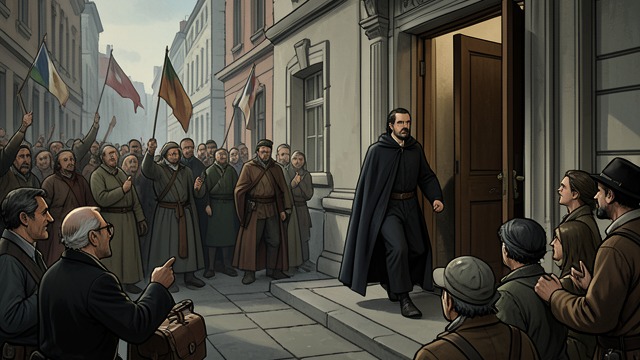
Public Opinion Turns
A fallen minister
Londoners jeer Wolsey as he leaves York Place, despite the cardinal’s claims that he served the people. The crowd’s response reminds Cromwell that popularity is unstable and often seeks novelty.
A general human hope
Cavendish suggests that people always expect something better from a change of ruler. Cromwell sees this as a common impulse rather than an English peculiarity.
The City Watches Anne
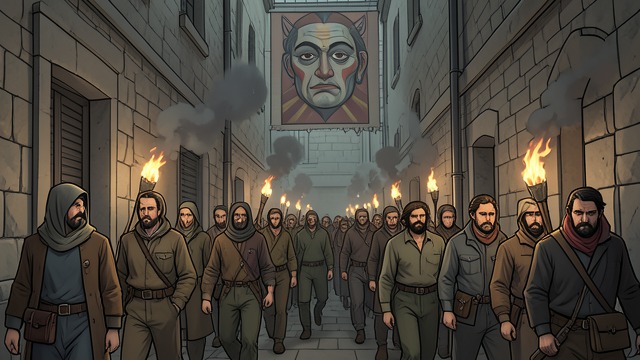
Ceremony and Dissent
A public coronation
Anne’s procession fills London with pageants, music, and royal display. Cromwell organizes the route and crowd controls to prevent disorder and secure the event’s public memory.
Competing loyalties
The city’s outward celebration does not erase support for Katherine. Ambassadors and courtiers read the crowd differently, revealing the gap between spectacle and belief.
A Kingdom Asked to Swear
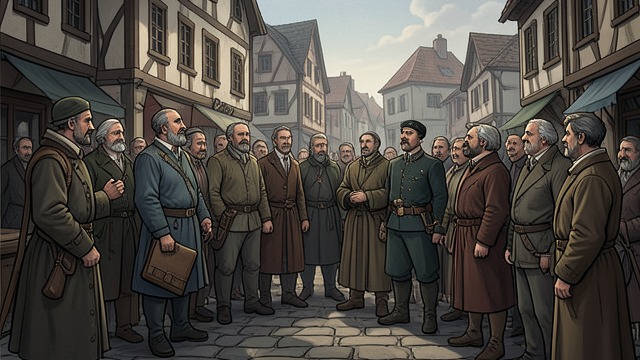
Loyalty Reaches the Parish
Oaths beyond court
Cromwell plans to send officers through towns and villages to secure the succession oath. He insists that ordinary people’s promises matter to the state.
The limits of enforcement
The effort reaches into households and local communities, where royal policy meets poverty, inherited faith, and suspicion. The king’s authority is tested not only in Parliament but in daily life.
Autumn 1529
1533
1534
